Chocolate bunnies are all well and good, but in my old age I've reached the point where I would rather sit back and have a listen to Bach's Easter Cantatas. Below, I've compiled pour vous an mp3 sample of Easter cantatas from Deutsche Grammophon catalogue no. 463 580-2. This recording was part of the Bach Cantata Pilgrimage, during which Sir John Eliot Gardiner, together with the musicians of the Monteverdi Choir and the English Baroque Soloists, performed all the surviving church cantatas by Bach, on the liturgical days for which they were composed, in different churches around Europe.
In terms of the Bach Werke Verzeichnis (Bach Works Catalogue), tracks 1 to 6 are taken from BWV 6 (Bleib bei uns, denn es will Abend werden), and 7 to 12 from BWV 66 (Erfreut euch, ihr Herzen).
Click on the first track to commence playback, and enjoy!
PS - What is it with Easter, anyway? Seriously, can anyone explain to me why it's never on the same date?
23 March 2008
Ach bleib bei uns, Herr Jesu Christ


22 March 2008
The Best Indie Record Store in Canada
CBC Radio 3 has initiated a contest to indentify Canada's Best Indie Record Store. My submission to the nomination committee went as follows:Located at River & Osborne, the hipster equivalent of Portage & Main, Music Trader has got to be the best record store in Winnipeg. They have EVERYTHING (new & used, tons of indie), they host live, in-store performances of local and touring bands all the time, and they're open until midnight!
They've got knowledgeable staff, a kooky mascot and, of course, the famous wall of customer polaroids. Plus, their long 'bar' of listening stations in front of windows facing out onto Osbrone Street is perhaps the best spot in the city for people watching.
For a kid from the suburbs, the plan was simple. Listen to RadioSonic (the predecessor of Radio3 for you kids out there) on CBC Radio 2, then go to Music Trader and buy the records. What could be easier? My taste in music is due in large part to the existence of this store.
I've been in Montreal for about year and a half now, I haven't really found anything that compares, so I'll be curious to check out the recommendations posted here.
Music Trader
97 Osborne Street
Winnipeg
On that note, I await your recommendations for a good indie record store in Montreal, preferably one with a fun atmosphere and all the week's new releases.
By the way, we also have an annual contest to designate the best independent English-language bookstore in this country. But no one cares.

Germans and the French language

Here's an amusing passage, pertaining to the prestige enjoyed by the French language in foreign lands:"Une jolie petite française", the conductor's wife said, evidently overjoyed at having an occasion to recite a few French words she knew by heart. This is always the case in Germanic lands, people love to be able to show that they understand French.
Robert Walser, »Der Gehülfe« (The Assistant), 1907, translation Susan Bernofsky (2007)
"Frau Tobler," Joseph thought, "knows no French at all, the poor thing!"« Une jolie petite française », dit en français la femme du contrôleur, manifestement ravie d'avoir l'occasion de débiter de mémoire quelques mots en français. C'est toujours ainsi dans les pays de langue allemande : les gens sont contents de pouvoir montrer qu'ils comprennent le français.
Robert Walser, »Der Gehülfe« (Le commis), 1907, traduction Bernard Lortholary (1985)
« Ma patronne, pensa Joseph, ne comprend pas un mot de français. La pauvre! »
... and we're back
After a brief hiatus of nine months — brought about by the new version of Blogger that not only linked my Blogger account to the wrong Google account and then wouldn't allow me to de-link it, but also completely messed up my template and sidebar — I'm finally back. Let's see if I can keep it up for more than a couple of months this time, shall we?
09 June 2007
A Book Design Blog
Oh yeah, I forgot to mention, I've started a blog about book design.
After reading a piece in Publishers Weekly about book design bloggers, featuring Christopher Papasadero and Joseph Sullivan, and then reading a post about French book design written by the latter, I decided to launch my own book design blog, putting my own knowledge of French books to particular use.
Première de couverture, or the fascinating world of book cover design, can be found at http://bookdesign.wordpress.com.

08 June 2007
Dictionnaire du monde germanique
Here it is, folks. The book that's had germanists and germanophiles all over the world salivating with anticipation for the past several years finally has a confirmed release date. After years of delays and one cancellation, I am pleased to report that the momumental Dictionnaire du monde germanique -- a 1000 page encyclopaedia covering historical, cultural, artistic, economic, political, sociological, religious and scientific aspects of the German-speaking civilisation -- will be published by Éditions Bayard on 27 September 2007.
Under the general editorship of Jacques Le Rider (EPHE Sorbonne), Michel Espagne (Normal Sup) and Élisabeth Décultot (CNRS), the book will feature articles written by leading germanists from around the world. Originally scheduled to be published by the Presses universitaires de France in 1999, the book was delayed until 2001, then 2002, and finally cancelled. Eventually there was talk that Bayard would publish it in 2005. 2005 came and still no book. Finally, in June 2005, I had confirmation from Jacques Le Rider himself that Bayard had agreed to publish the book, although the release date remained unconfirmed. In January 2007 Bayard indicated that it would most likely be released some time in Fall 2007, and then on 6 June 2007, the Google Alert that I configured alerted me (it does what it says on the tin!) to the publication date. Priced at 129 Euros, I don't even want to think about what the Canadian retail price will end up being. I had better start saving up...
Fiche technique
Title: Dictionnaire du monde germanique
Sous la direction de Michel Espagne, Elisabeth Décultot et Jacques Le Rider
Publisher: Éditions Bayard
ISBN-10: 2227476524
ISBN-13: 9782227476523
Publication Date: 27 September 2007
Format: Broché, 24 x 17 cm, 1100 pages
Features: Illustrations en noir et blanc, cartes
Retail Price (France): 129 Euros
Retail Price (Canada): To be confirmed
What follows is a preliminary partial list of contributors and article titles, pieced together from information found here and there on the web. I have no idea if all of these will make it into the final product.
François Delpla
Jacques Ehrenfreund
Stéphanie Buchenau
Guillaume Garner
Lutz Winckler
Moussa Sarga
Thomas Serrier
Carlos Herrera
Daniel Baric
Marielle Silhouette
Roland Krebs
Frank Muller
Cécile Schenck
Pierre Monnet (sub-editor of the Mediaeval section of the dictionary)
As time permits, I'll be adding more information to this preview.
27 May 2007
I think my g/f is cheating on me.
"I think my g/f is cheating on me". Thus begins this strangely compelling tale of raw human drama that turns out to be nothing more than the backdrop to a most benign of technical inquiries at the MiniDisc Community Forums.
I'm not sure if this is real or not, but I couldn't control my laughter after reading the technical question that is posed in the final sentence of the narrative, with no transition whatsoever. Comedy, intentional or not, is all about timing.
24 May 2007
Varsity Blues
France's universities could be first test for Sarkozy. From Marco Chown Oved of the Associated Press, via the International Herald Tribune:
The Sorbonne, France's most renowned university, has no cafeteria, no student newspaper [and] no varsity sports. [....] It also costs next-to-nothing to attend, and admission is open to everyone who has finished high school. [....] The Sorbonne also has no alumni associations.
Well, jeez Louise! No varsity sports. Golly!
Who remembers that epiosde of The Simpsons when the owner of a Thai Restaurant hires Bart to distribute menus so that he can do more business, thereby preventing his daughter from having to attend one of those American universities where there are 'baseball caps everywhere' and 'serious students [are] powerless against drunken jock-ocracy'?
Seriously, why are North Americans so shocked to find out that, very often, the rest of the world does things differently? I mean, the Sorbonne was founded in 1257, centuries before European North America came into being. If I were to embark on a study of French universities I would have been more surprised to find that they had taken up the American model. After all, having grown up in the Canadian Midwest, just 100km north of the American border, and now living in the world's second-largest French speaking city (with a huge French expat community), a mere 70km from the American border, I can tell you that even though the article states that 'only 14.2% of adults have a university education in France, compared with 29,4% in the United States', you'd never know it. For all of their supposed education, your average American cannot come close to your average French (or indeed European) person when it comes to possessing a culture générale, the kind of UNIversal, all-round general knowledge in the areas of arts, science and culture (to say nothing of basic world geography) to which any civilised person can reasonably aspire and that a UNIversity education is supposed to provide. In North Dakota, a border state, they actually ask you with a straight face in what American state Canada is located in.
It should also be noted that the baccalauréat, the French secondary school leaving exam, is much more difficult and comprehensive than anything an average North American public school is likely to challenge you with, and could easily be placed on a par with first or second year exams in most of North America's universities. Indeed, the most prestigious high school programme in which one can be enrolled in North America and in much of the world is called the International Baccalaureate and is directly modelled upon the French baccalauréat.
I will however conceed that there should at least be some tuition fee for attending French universities and that way too many resources are allocated to the network of Grandes Écoles (the Ivy League of France if you will) while the universities are left to cope with too many students and not enough funding. At the same time, if you possess the intelligence to succeed at university but can't afford the tuition, then that's a problem too.
What I'm basically saying is that the French aren't as fat as Americans, so they don't need varsity sports. They have their own traditions and, to a certain extent, they should just continue to go their own way.
20 May 2007
Trois minutes, douche comprise
Le Tout Chirac: A life at the top: From John Lichfield in yesterday's Independent, a brilliantly succinct A-to-Z summary of Chirac's political career. Truly an essential read.
Choice excerpts:
In the 1980s, M. Laumond says, the procession of women into M. Chirac's office was so constant that women staffers would joke: "Chirac? Three minutes. Shower included."
[....]
In 1979 he campaigned as a virulent Eurosceptic in the European Parliament elections. France, he said, faced "economic servitude to Bonn ... national annihilation by Brussels". In the presidential campaign of 1988, he transformed himself into European visionary, with forests of blue and yellow European flags at all his rallies.
[....]
In their last eight years in the official apartments of the Mayor [of Paris], Jacques and Bernadette spent €2m on food and drink (not including official functions). This worked out at €684 a day (including €60 a day on "herbal tea").
[....]
Vast quantities of cash passed through M. Chirac's hands. It was moved around Paris in briefcases, even suitcases. Chirac is said to have kept the cash in a safe in his private lavatory at the town hall, using the flush to cover the sound of the "clicks" when he turned the dial.
[....]
[In the early 1950s] he also sold ice cream in a Howard Johnson's restaurant in Boston. One of his most treasured possessions is a certificate, signed by Howard Johnson himself, which declares that: "Mr Jack Chirac is a first-class soda jerk."
[....]
In July 1979, Anh Dao Traxel, a 21-year-old Vietnamese " boat person", arrived friendless at Charles de Gaulle airport. She was approached by a tall man who told her: "Don't cry any more, my dear. From now on, you will live with us." And so Anh became the Chiracs' " secret" foster daughter, living in the Paris town hall.
[....]
His favourite food is "Tête de Veau", which is not for the squeamish. One recipe, in English, on the internet begins with: "Rip the face off a baby cow ..."
[....]
In 2005 an open microphone recorded M. Chirac's distaste for British cuisine. He said: "The only thing that they have ever done for European agriculture is mad cow disease. You cannot trust people who have such bad cuisine. It is the country with the worst food after Finland."
[....]
Jacques Chirac is a great fan of Japanese Sumo wrestling. He sits up late at night drinking Corona beer and watching Sumo tapes, sent from Japan.
[....]
Why did M. Chirac spend part of his 2004 summer holiday in the small, rainy village of North Hatley in Quebec? The satirical television puppet show, Les Guignols de l'Info, suggested M. Chirac sneaked away to have a face-lift, something for which Canada is celebrated.
As a flag-waving patriot, I was unware of that particular source of Canadian national pride.
At the end of the piece is a list of famous Chirac quotes. To summarise the career I would choose "Promises are binding only for those who receive them" and to summarise the man it's got to be "You know, at the end of the day, I like only two things: cavalry trumpets and detective novels". Brilliant!
For more amusement from the political career of Jacques Chirac, see Karl Zéro's scathingly hirlarious documentary film Dans la peau de Jacques Chirac (2006). I don't think it's been released here, but it was shown at the 2006 Montreal World Film Festival.
Old People and Old Dutch
Winnipeg mayor launches seniors council: "Winnipeg Mayor Sam Katz announced plans Friday to appoint seniors to an advisory council to offer recommendations about how the city can better serve its aging population."
*yawn* How about a plan to keep educated young people (who continue to flee in record numbers) in Winnipeg? Just a thought... While the NDP builds Waverly West, the mayor cancels funding for rapid transit and the police brutally represses pro-cyclist events like Critical Mass, I'll continue to enjoy the metro system, countless bike lanes and all-round vibrant urban living here in Montreal.
Winnipeg's one big advantage over Montreal, namely the availability of Old Dutch potato chips (which was not even an advantage over Calgary, where most young people seem to move), is no longer. Commericals on local Montreal television this spring tipped me off, and I can now happily confirm that Dutch Crunch kettle chips are now being sold at Métro supermarkets and Jean Coutu pharmacies. They're being marketed out here (and perhaps elsewhere in Eastern Canada?) as a premium snack food.
Meanwhile, an ageing Winnipeg becomes one big seniors' council.
15 December 2006
Early Twentieth Century German Culture
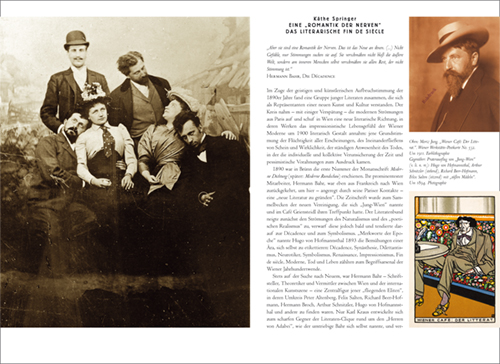
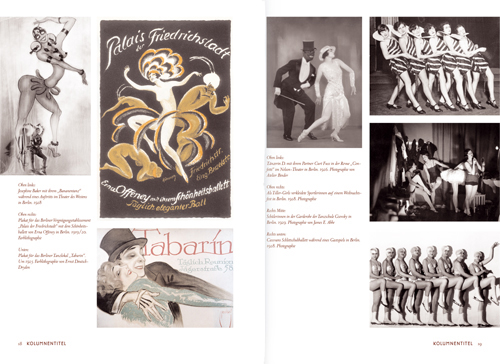
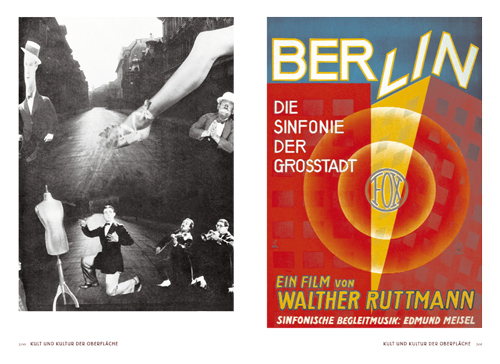
As a young up-and-coming amateur germanist, I was thrilled this week to stumble upon Christian Brandstätter Verlag's publishing programme, and more specifically Wien um 1900 | Kunst und Kultur – Fokus der europäischen Moderne (October 2005) and Berlin | Die 20er Jahre (September 2006). Lavishly illustrated and featuring authoratative essays, these two books brilliantly capture the spirit of these dual golden eras that the germanophone world enjoyed before it all went tits up in 1933.
Having been simultaneously published in both German and French (Éditions Hazan), English translations are now coming out in British (Thames & Hudson) and American (Vendome Press) editions. My German skills are not where I would like them to be, so I've picked up the American edition of the Vienna book and the French edition of the Berlin book, and I am loving them. Thank goodness for Canada, where you can easily buy a French edition of a German book if no English publisher has yet got around to translating it. Wien um 1900 | Kunst und Kultur – Fokus der europäischen Moderne
Vienne fin de siècle (FR)
Vienna 1900 and the Heroes of Modernism (UK)
Vienna 1900: Art, Life, & Culture (US)
Christian Brandstätter, General Editor
With texts by: Hans Bisanz; Marian Bisanz-Prakken; Monika Faber; Peter Gorsen; Daniela Gregori; Hanel Koeck; Richard Kurdiovsky; Rainer Metzger; and Käthe Springer. From the French publisher:
Creuset de seize différentes nations réunies par l'Empire austro-hongrois finissant, Vienne «fin de siècle» a tout à la fois incarné et symbolisé le mythe et l'inextricable imbroglio de cet édifice orgueilleux sur le déclin en 1900. Le paradoxe a voulu que cette ville, synonyme d'apocalypse, à la veille d'être effacée comme capitale impériale par la Première Guerre mondiale, ait dans le vertige de sa chute su définir quelques-uns des axes de la modernité qui ont conditionné tout le XXe siècle. Tel un chant du cygne, l'extraordinaire épanouissement culturel que connaît Vienne alors concerne aussi bien les arts plastiques (avec la Sécession de Gustav Klimt, avec Egon Schiele, Oskar Kokoschka, etc.), l'architecture (avec Otto Wagner, Joseph Hoffmnn, Adolf Loos, Joseph Maria Olbrich), la musique (avec Hugo Wolf, Gustav Malder, Arnold Schönberg, Alban Berg, Anton . Webern), la littérature (avec Hugo von Hofmannsthal, Karl Kraus, Arthur Schnitzler), la naissance de la psychanalyse (avec Sigmund Freud, Viktor Adler, Wilhelm Reich) ou de nouvelles interrogations philosophiques sur le langage et les images (avec Fritz Mauthner et Ludwig , Wittgenstein). La présente encyclopédie visuelle restitue ces fortes personnalités à travers leurs ouvrages, et les archives photographiques qui ont été conservées, mais aussi les cercles, les groupes, les revues (tel Ver Sacrum), les cafés littéraires, où ce monde culturel se réunissait, le tout commenté dans le détail par les conservateurs et historiens spécialistes de chacune des disciplines.
Publication Date: October 2005
ISBN 2754100415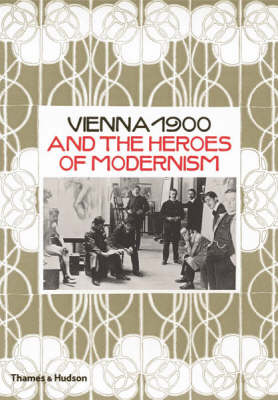 From the British publisher:
Fin-de-siècle Vienna was the central gathering point of the European avant-garde and an extraordinary laboratory for new ideas and concepts.
Here is a dazzlingly illustrated (with over 700 illustrations) portrait of this astonishing cultural ferment and its most important protagonists. The contributors discuss Klimt and the artists and architects – among them Oskar Kokoschka, Egon Schiele, Josef Hoffmann and Adolf Loos – who joined him in the ‘Secession’, and reflect on the glories of the Wiener Werkstätte’s crafts, prints, graphic art and fine book production.
Themes range from the compositional logic of such musical pioneers as Hugh Wolf, Gustav Mahler, Arnold Schönberg, Alan Berg and Anton Webern to the literary and journalistic life of the Café Griensteidl, the favourite haunt of such luminaries as Hugo von Hofmannsthal, Richard Beer-Hofmann, Hermann Bahr, Peter Altenberg and Karl Kraus.
Further figures integral to the mix include Theodor Herzl, the founder of Zionism; the dramatist Arthur Schnitzler and his one-act diagnoses of the morbidly cyclical nature of washed-out emotion; Sigmund Freud, Alfred Adler and Wilhelm Reich with their masterly insights into the human psyche; and Fritz Mauthner and Ludwig Wittgenstein, pioneers in the philosophy of language.
The book includes a compact but detailed appendix that offers information on the significant figures, institutions and publications of this remarkable period.
Publication Date: August 2006
ISBN 0500513139 From the American Publisher:
At the turn of the 20th century, Vienna was one of the most exciting cities on earth--the central gathering spot of the European avant-garde in art, architecture, literature, music, journalism, philosophy, psychiatry, and theater. The dynamic cross-pollination among the revolutionary figures involved--Klimt, Kokoschka, the Wiener Werkstätte, Mahler, Freud, Wittgenstein, and many more--turned the Austrian capital into an extraordinary laboratory for new ideas and concepts. It is where modern was born.
With more than 500 illustrations, Vienna 1900 is a unique, concise portrait of a vibrant world and its most important protagonists.
Publication Date: October 2006
ISBN 0865651752
Sample pages: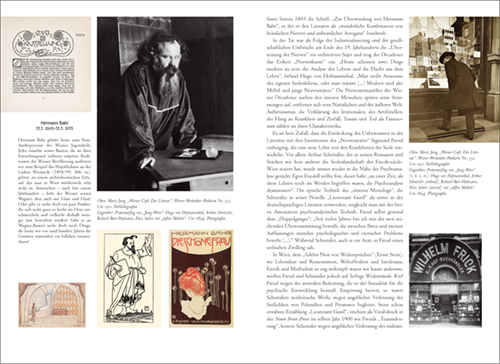
 Berlin | Die 20er Jahre
Berlin : les années vingt (FR)
Berlin in the Twenties (UK)
Berlin: The Twenties (US)
Rainer Metzger, General Editor
Table of Contents (from the British edition):
1. The City as Parvenu; 2. The November Vanishing Point: Revolution and Reaction; 3. War and Peace: Expressionism and Dada; 4. The Aesthetics of Truth; 5. Unity and Purity: Utopias, Collectives, Futurism; 6. The Modern Metropolis; 7. High Culture; 8. The Truth in Flight: Berlin and the Alternative Modernity; 9. The Argument of the Masses; 10. The Third Reich or: How Was It Possible? From the French publisher:
C'est la République de Weimar au cours des années 1918 à 1933 qui propulsa Berlin au zénith. Ainsi, le
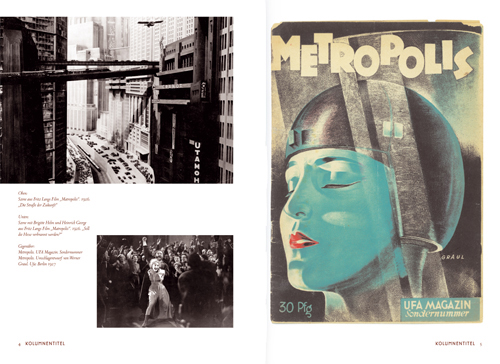
Berlin des années vingt a donné naissance à une culture qui a totalement vécu de la politisation. Il y germait des utopies qui, en cette époque de crise, traçaient des perspectives de progrès. La communication prenait son essor dans les sphères populaires par le biais de la photo, du cinéma, des affiches, de l'agit-prop, du cabaret et des variétés. Grâce à ces techniques, ces millions de Berlinois ne formaient plus une masse mais des citoyens : ils acquéraient à la fois un accès et une dignité à la culture. Ces évolutions venaient de la masse, mais il y avait une avant-garde pour les faire entrer dans les pratiques et les prémices des beaux-arts. Il suffit d'aligner quelques noms, George Grosz, Otto Dix, Raoul Hausmann, John Heartfield, Hannah Höch pour l'aventure Dada ; Fritz Lang, Ernst Lubitsch pour le cinéma et la photographie ; Mies van der Rohe, Moholy-Nagy, Lissitzky pour les grandes conquêtes utopistes ou fonctionnelles de l'architecture, du design et de l'œuvre d'art totale, pour prendre la mesure de ces années de révolutions et de créations tous azimuts.
Publication Date: October 2006
ISBN 2754101128 From the American Publisher:
Berlin, a haunting vision of the twentieth century’s first modern city, is a cultural history filled with 400 shockingly fresh and romantic photographs, paintings, and other images.
In the brief years between the twentieth century’s two cataclysmic world wars, the modern metropolis was invented in Berlin. Life in Berlin was a cabaret, and Marlene Dietrich, Thomas Mann, Alfred Einstein, or Joseph Goebbels might be seated at the next table. The avant-garde thrived there. The mass media magnified the impact of everything from fads to political ideas. Subcultures and club cultures nurtured gender-bending fashions and lifestyles. Architects and designers struggled to free themselves from the past. In the background beat the new rhythms of urban experience: the coming and going of the latest planes and trains and automobiles, the clacking of typewriters in vast offices, the jazz band that never sleeps. Berlin: The Twenties is a book for history buffs, travelers, and lovers of modern art and design.
Publication Date: May 2007
ISBN 0810993295 From the British publisher:
Berlin in the 1920s was home to some of the most extraordinary minds of modern times, and was a vigorous melting pot of radical new ideas and concepts in every field. There was a massive boom in popular artforms, including photography and cinema, graphic design and poster art, agitprop and cabaret, which gave all the people of the city a chance to enter the cultural arena. Comprising essays on the key movements and figures of the era, this profusely illustrated book is a highly readable portrait of this astonishing cultural ferment and its most important protagonists.
Publication Date: April 2007
ISBN 0500513546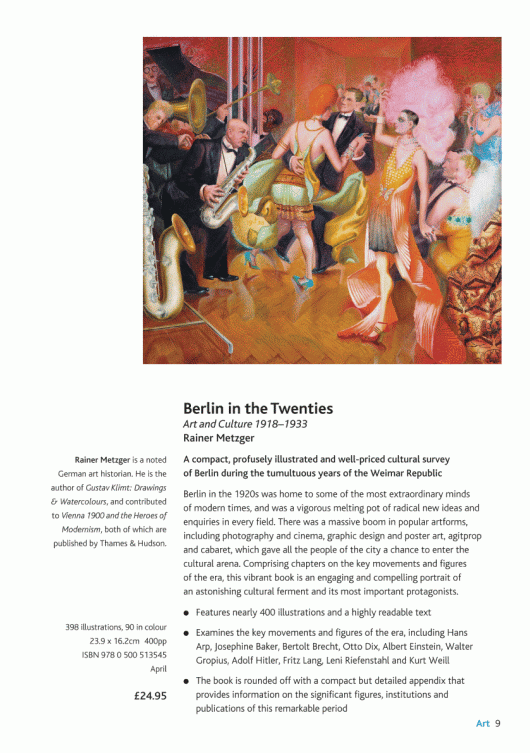
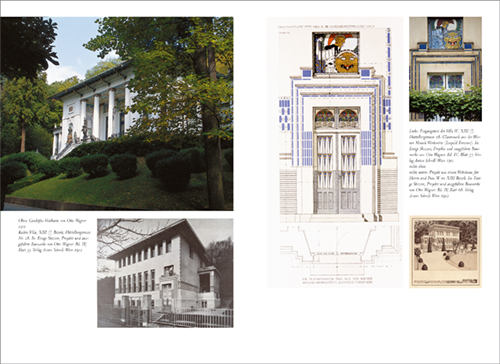
Sample pages:

30 November 2006
Things They Don't Got Here
Over the past few years, as I've extolled the virtues of Montreal while languishing in Winnipeg, exasperated interlocutors have often exlaimed 'what don't they have in Montreal?!'. Now that I've been here for a few months, I can start to answer that question. Rapid transit, film festivals, bike lanes and a general European feel are all well and good, but there are a few things missing:
Notwithstanding, I am still thrilled to be here; all of the postive aspects of life here more than counterbalance the few lacunes outlined above.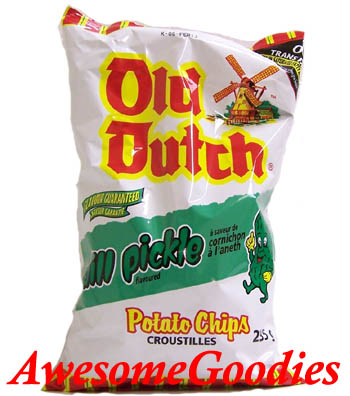 Old Dutch Potato Chips. This is the obvious one. It's fairly well-known on the Prairies that when you move out East, you sacrifice easy access to perhaps the world's best crisps, made with loving care in Winnipeg and Calgary. When I was a lad my cousin moved to Ottawa and would always stock up on Old Dutch whenever she was back in Winnipeg, and I suspect I'll be no different. In all Canadian cities, especially in the big ones like Montreal, there are specialty food shops catering to ethnic groups from almost every country in the world, but nothing for us folks from the West. I can easily find obscure brands of Caribbean hot sauce, but no potato chips made two provinces over. Just another Canadian paradox.
28 November 2006
From Winnipeg to Montreal in Three Months Flat
 Well, here we are once again. After an absence of almost four months, I've decided to come back and do some blogging again. While I wasn't blogging I was moving my life 2000km east, and am now comfortably installed in Montreal, the land of film festivals, bike lanes, bookshops and rapid transit. Having been born and raised in Winnipeg, it was not an easy decision to leave, but after nearly 25 years I was ready to try something new. Since my first visit in 1999, I always thought in the back of my mind that I might want to try and make a go of it out here, and now seemed as good a time as any. Better to have a go now while I'm still young. If I don't like it after five years, I can always go back (or move on), and I still won't even be 30 years old.
Another young Winnipegger flees the city of his birth. It's that same, depressing, oft-repeated scenario, but at least I didn't move to Calgary or Toronto...
05 August 2006
Les citations du jour 2006-08-05
Parmi les commentaires suscités par ce billet de blog au sujet de la qualité du français au Québec, retenons les phrases suivantes :Au Québec, parler un français hexagonal, digne d'une page éditoriale du Monde Diplomatique, c'est s'exposer dangereusement à de lourdes représailles qui peuvent aller jusqu'aux coups.[Permalien]
Je me demande bien sur quoi, nous les québécois francophones, appuyons notre fierté nationaliste alors que nos universitaires peinent souvent à former des phrases cohérentes et alors que des soubrettes françaises expriment distinctement leurs idées avec des phrases dignes d'une langue littéraire....[Permalien]
Regardez et écoutez nos bons artistes canadiens français québécois qui sont supposés être les haut-parleurs de notre langue:
Star academie, Excès de stars, Elvis story, Les Boys, Showtime, et maintenant Bon Cop Bad Cop. Etc. Etc...
Ils ont des leçons à nous donner? C'est vrai, c'est de la faute du fédéral et du Canada anglais...[Permalien]Les universités ont failli aussi dans cette tâche en baissant les bras...Quand l'Université Laval s'adresse à mes jeunes "Chers gradués" et"débutez le questionnaire..."et quand à la maïtrise l'élève demande au prof:"on les apprend-tu toutes les poèmes?" sans que le professeur ne bronche,aussi bien dire que le ver est dans le fruit...et là,je ne vous fais pas rapport de ce que j'entends dans le chantier de construction à deux rues d'ici..Pour moi,cette partie est perdue,mais entre-temps,ça peut amuser réviseurs linguistiques,traducteurs et tutti quanti...[Permalien]
Je vous recommande fortement la lecture du billet d'origine et de sa suite, ainsi que les autres commentaires qui s'y trouvent, pour retrouver l'intégralité contextuelle des propos cités ci-haut.
Après les acquis de la révolution tranquille, il me semble que c'est maintenant la qualité du français qui doit être le grand enjeu linguistique au Québec. Récemment, j'ai fait remarquer l'incongruité de la phrase suivante : SÉPARONS NOUS DES TETE CARRER ET DES LIBERAL ET VIVE LE BLOC QUÉBECOIS (sic). C'était plus facile de m'insulter que de reconnaître que ce jeune revendiquait un état francophone souverain dans un français pourri, et qu'il existe un vrai problème au Québec. Le combat pour un français de qualité est loin d'être gagné.
18 July 2006
Aidez l'Espagne

29,8% des Espagnols juge que le soulèvement militaire du général Franco, point de départ de la guerre civile espagnole, était 'justifié'
Yes indeed. Nearly a third of Spaniards still believe that Franco's uprising was justified. Good on them. When I wrote earlier this month that I thought that there seemed to be something of a chevauchement between Spanish support at the World Cup and Franco's Fan Club, I had no idea that the attitude of these fans of Franco (and possibly of football) had pervaded Spanish society as a whole. Golly! You can implore Aidez l'Espagne all you want, but if after all these decades we're still here, there doesn't seem much we can do. At the end of the day, nul n'est servi mieux que par soi-même. Before we can do anything for them they're going to have to help themselves a little bit.