Showing posts with label Europa. Show all posts

08 June 2008

Following Euro 2008 from Canada

Well, Euro 2008 is in full swing now and, as ever, it's not that easy to keep on top of everything when you're stuck in the backwater footballistique that is Canada. Obviously, things get easier with every major tournament as the amount of coverage available on the Internet increases, but none of the British Home Nations have qualified this time round, and the amount of English-language coverage of Euro 2008 has suffered as a consequence. Fortunately for the Canadian who has taken one of his country's fundamental principles to heart, there's still plenty of French-language coverage available to go along with what remains of the British coverage. After all, France are qualified for the tournament, and Switzerland, one of the host countries, is partially French-speaking.

Here then, without further ado, is The Canadian's Guide to Following Euro 2008 From afar.

The Basics:
Television Schedule [English]
Television Schedule [French]

Feed your feed reader:
If you do the whole RSS thing, I've put together a feed that you can subscribe to. It features a good mix of Euro 2008 news and views, in both English and French. You can also view the items as a web page. The most recent items from this feed will also appear in the right-hand sidebar of this blog for the duration of the competition.

Listen on the go:
There are also plenty of Euro 2008 podcasts out there to listen to. I'm currently subscribed to the following:

Disappointing:
RTL has plenty of audio on its website, but the podcast feeds (if they even exist), en bonne tradition française, are very well hidden indeed.

This post will be updated as new information becomes available. The custom Euro 2008 feed that I've put together is being fine-tuned on an ongoing basis.

15 December 2006

Early Twentieth Century German Culture

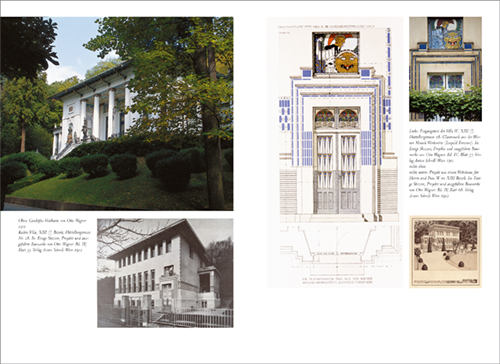
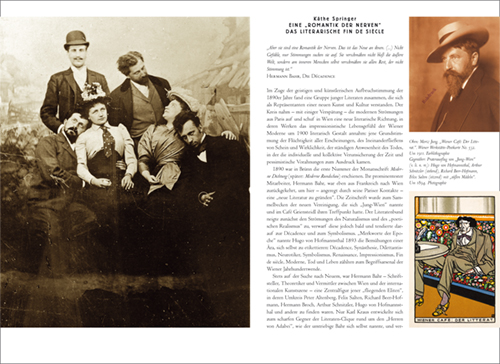
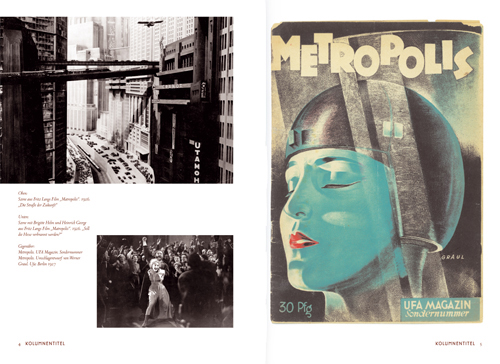
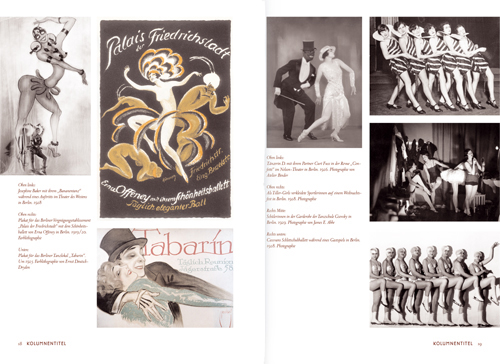
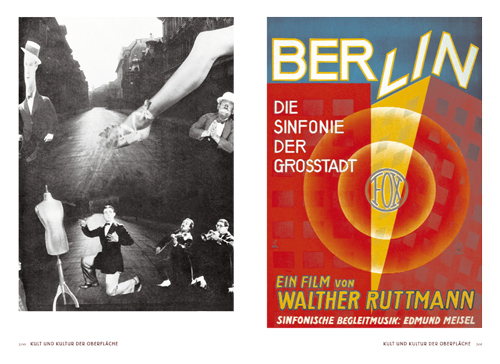
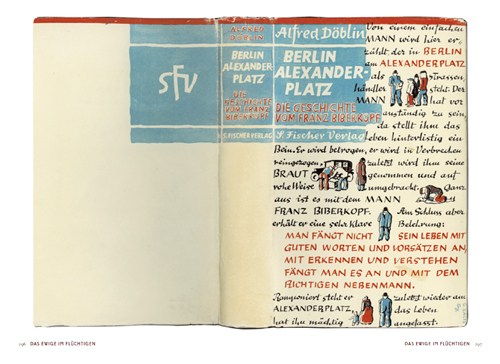
As a young up-and-coming amateur germanist, I was thrilled this week to stumble upon Christian Brandstätter Verlag's publishing programme, and more specifically Wien um 1900 | Kunst und Kultur – Fokus der europäischen Moderne (October 2005) and Berlin | Die 20er Jahre (September 2006). Lavishly illustrated and featuring authoratative essays, these two books brilliantly capture the spirit of these dual golden eras that the germanophone world enjoyed before it all went tits up in 1933.

Having been simultaneously published in both German and French (Éditions Hazan), English translations are now coming out in British (Thames & Hudson) and American (Vendome Press) editions. My German skills are not where I would like them to be, so I've picked up the American edition of the Vienna book and the French edition of the Berlin book, and I am loving them. Thank goodness for Canada, where you can easily buy a French edition of a German book if no English publisher has yet got around to translating it.
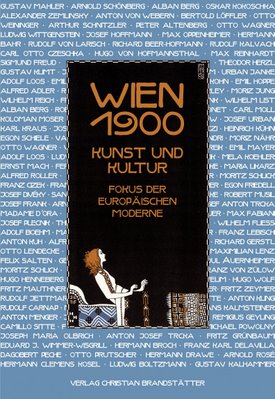
Wien um 1900 | Kunst und Kultur – Fokus der europäischen Moderne
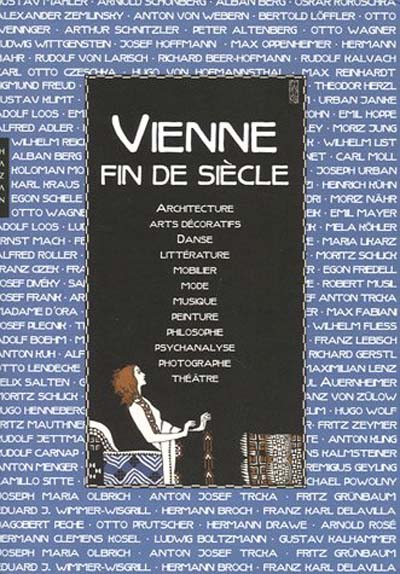
Vienne fin de siècle (FR)
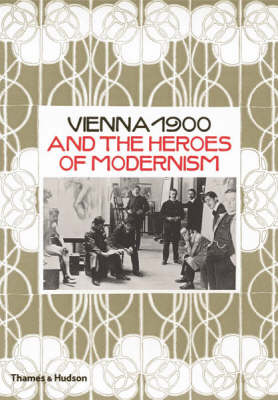
Vienna 1900 and the Heroes of Modernism (UK)
Vienna 1900: Art, Life, & Culture (US)


Christian Brandstätter, General Editor

With texts by: Hans Bisanz; Marian Bisanz-Prakken; Monika Faber; Peter Gorsen; Daniela Gregori; Hanel Koeck; Richard Kurdiovsky; Rainer Metzger; and Käthe Springer.
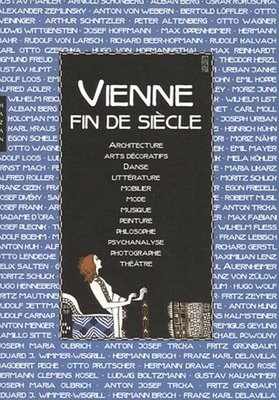


From the French publisher:

Creuset de seize différentes nations réunies par l'Empire austro-hongrois finissant, Vienne «fin de siècle» a tout à la fois incarné et symbolisé le mythe et l'inextricable imbroglio de cet édifice orgueilleux sur le déclin en 1900. Le paradoxe a voulu que cette ville, synonyme d'apocalypse, à la veille d'être effacée comme capitale impériale par la Première Guerre mondiale, ait dans le vertige de sa chute su définir quelques-uns des axes de la modernité qui ont conditionné tout le XXe siècle. Tel un chant du cygne, l'extraordinaire épanouissement culturel que connaît Vienne alors concerne aussi bien les arts plastiques (avec la Sécession de Gustav Klimt, avec Egon Schiele, Oskar Kokoschka, etc.), l'architecture (avec Otto Wagner, Joseph Hoffmnn, Adolf Loos, Joseph Maria Olbrich), la musique (avec Hugo Wolf, Gustav Malder, Arnold Schönberg, Alban Berg, Anton . Webern), la littérature (avec Hugo von Hofmannsthal, Karl Kraus, Arthur Schnitzler), la naissance de la psychanalyse (avec Sigmund Freud, Viktor Adler, Wilhelm Reich) ou de nouvelles interrogations philosophiques sur le langage et les images (avec Fritz Mauthner et Ludwig , Wittgenstein). La présente encyclopédie visuelle restitue ces fortes personnalités à travers leurs ouvrages, et les archives photographiques qui ont été conservées, mais aussi les cercles, les groupes, les revues (tel Ver Sacrum), les cafés littéraires, où ce monde culturel se réunissait, le tout commenté dans le détail par les conservateurs et historiens spécialistes de chacune des disciplines.

Publication Date: October 2005
ISBN 2754100415
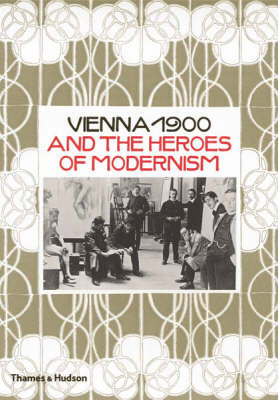
From the British publisher:
Fin-de-siècle Vienna was the central gathering point of the European avant-garde and an extraordinary laboratory for new ideas and concepts.
Here is a dazzlingly illustrated (with over 700 illustrations) portrait of this astonishing cultural ferment and its most important protagonists. The contributors discuss Klimt and the artists and architects – among them Oskar Kokoschka, Egon Schiele, Josef Hoffmann and Adolf Loos – who joined him in the ‘Secession’, and reflect on the glories of the Wiener Werkstätte’s crafts, prints, graphic art and fine book production.
Themes range from the compositional logic of such musical pioneers as Hugh Wolf, Gustav Mahler, Arnold Schönberg, Alan Berg and Anton Webern to the literary and journalistic life of the Café Griensteidl, the favourite haunt of such luminaries as Hugo von Hofmannsthal, Richard Beer-Hofmann, Hermann Bahr, Peter Altenberg and Karl Kraus.
Further figures integral to the mix include Theodor Herzl, the founder of Zionism; the dramatist Arthur Schnitzler and his one-act diagnoses of the morbidly cyclical nature of washed-out emotion; Sigmund Freud, Alfred Adler and Wilhelm Reich with their masterly insights into the human psyche; and Fritz Mauthner and Ludwig Wittgenstein, pioneers in the philosophy of language.
The book includes a compact but detailed appendix that offers information on the significant figures, institutions and publications of this remarkable period.

Publication Date: August 2006
ISBN 0500513139
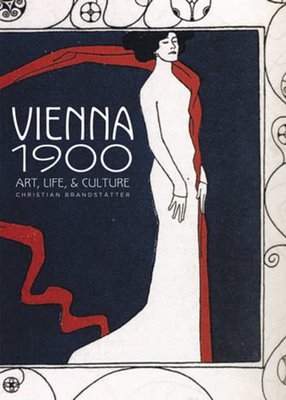
From the American Publisher:
At the turn of the 20th century, Vienna was one of the most exciting cities on earth--the central gathering spot of the European avant-garde in art, architecture, literature, music, journalism, philosophy, psychiatry, and theater. The dynamic cross-pollination among the revolutionary figures involved--Klimt, Kokoschka, the Wiener Werkstätte, Mahler, Freud, Wittgenstein, and many more--turned the Austrian capital into an extraordinary laboratory for new ideas and concepts. It is where modern was born.
With more than 500 illustrations, Vienna 1900 is a unique, concise portrait of a vibrant world and its most important protagonists.

Publication Date: October 2006
ISBN 0865651752

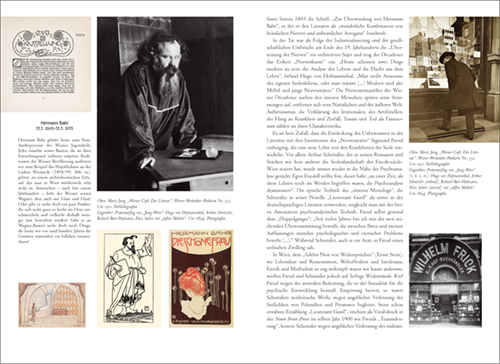
Sample pages:


Berlin | Die 20er Jahre
Berlin : les années vingt (FR)
Berlin in the Twenties (UK)
Berlin: The Twenties (US)


Rainer Metzger, General Editor

Table of Contents (from the British edition):

1. The City as Parvenu; 2. The November Vanishing Point: Revolution and Reaction; 3. War and Peace: Expressionism and Dada; 4. The Aesthetics of Truth; 5. Unity and Purity: Utopias, Collectives, Futurism; 6. The Modern Metropolis; 7. High Culture; 8. The Truth in Flight: Berlin and the Alternative Modernity; 9. The Argument of the Masses; 10. The Third Reich or: How Was It Possible?
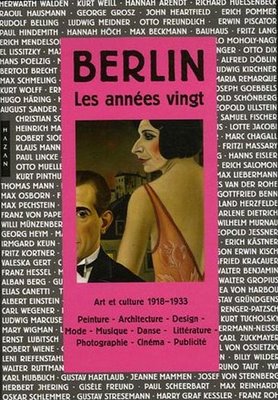

From the French publisher:
C'est la République de Weimar au cours des années 1918 à 1933 qui propulsa Berlin au zénith. Ainsi, le
Berlin des années vingt a donné naissance à une culture qui a totalement vécu de la politisation. Il y germait des utopies qui, en cette époque de crise, traçaient des perspectives de progrès. La communication prenait son essor dans les sphères populaires par le biais de la photo, du cinéma, des affiches, de l'agit-prop, du cabaret et des variétés. Grâce à ces techniques, ces millions de Berlinois ne formaient plus une masse mais des citoyens : ils acquéraient à la fois un accès et une dignité à la culture. Ces évolutions venaient de la masse, mais il y avait une avant-garde pour les faire entrer dans les pratiques et les prémices des beaux-arts. Il suffit d'aligner quelques noms, George Grosz, Otto Dix, Raoul Hausmann, John Heartfield, Hannah Höch pour l'aventure Dada ; Fritz Lang, Ernst Lubitsch pour le cinéma et la photographie ; Mies van der Rohe, Moholy-Nagy, Lissitzky pour les grandes conquêtes utopistes ou fonctionnelles de l'architecture, du design et de l'œuvre d'art totale, pour prendre la mesure de ces années de révolutions et de créations tous azimuts.

Publication Date: October 2006
ISBN 2754101128

From the American Publisher:
Berlin, a haunting vision of the twentieth century’s first modern city, is a cultural history filled with 400 shockingly fresh and romantic photographs, paintings, and other images.
In the brief years between the twentieth century’s two cataclysmic world wars, the modern metropolis was invented in Berlin. Life in Berlin was a cabaret, and Marlene Dietrich, Thomas Mann, Alfred Einstein, or Joseph Goebbels might be seated at the next table. The avant-garde thrived there. The mass media magnified the impact of everything from fads to political ideas. Subcultures and club cultures nurtured gender-bending fashions and lifestyles. Architects and designers struggled to free themselves from the past. In the background beat the new rhythms of urban experience: the coming and going of the latest planes and trains and automobiles, the clacking of typewriters in vast offices, the jazz band that never sleeps. Berlin: The Twenties is a book for history buffs, travelers, and lovers of modern art and design.

Publication Date: May 2007
ISBN 0810993295

From the British publisher:
Berlin in the 1920s was home to some of the most extraordinary minds of modern times, and was a vigorous melting pot of radical new ideas and concepts in every field. There was a massive boom in popular artforms, including photography and cinema, graphic design and poster art, agitprop and cabaret, which gave all the people of the city a chance to enter the cultural arena. Comprising essays on the key movements and figures of the era, this profusely illustrated book is a highly readable portrait of this astonishing cultural ferment and its most important protagonists.

Publication Date: April 2007
ISBN 0500513546
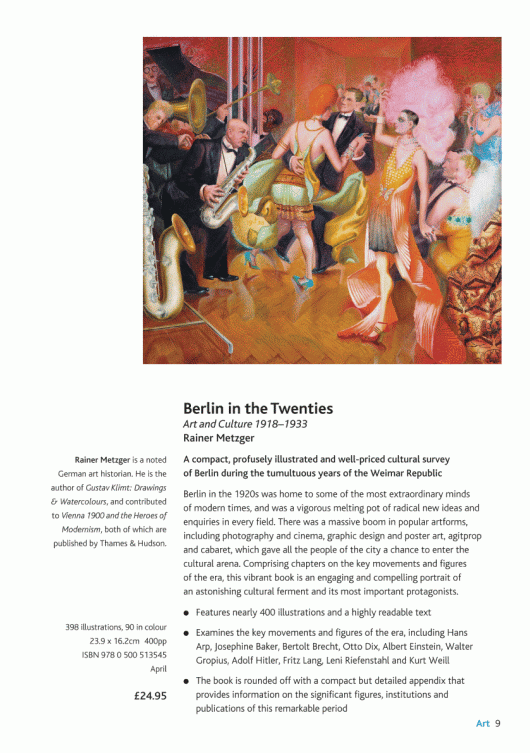


Sample pages:


18 July 2006

Aidez l'Espagne

This morning I was greeted with the following bit of wonderful news in the Nouvel observateur:

29,8% des Espagnols juge que le soulèvement militaire du général Franco, point de départ de la guerre civile espagnole, était 'justifié'
Yes indeed. Nearly a third of Spaniards still believe that Franco's uprising was justified. Good on them. When I wrote earlier this month that I thought that there seemed to be something of a chevauchement between Spanish support at the World Cup and Franco's Fan Club, I had no idea that the attitude of these fans of Franco (and possibly of football) had pervaded Spanish society as a whole. Golly! You can implore Aidez l'Espagne all you want, but if after all these decades we're still here, there doesn't seem much we can do. At the end of the day, nul n'est servi mieux que par soi-même. Before we can do anything for them they're going to have to help themselves a little bit.

16 July 2006

Le ciel d'été remplit nos coeurs de sa lucidité

With temperatures surpassing 35°C this week, it is safe to say that summer has definitely arrived on plains of central Canada. From -35°C in the winter to 35°C in the summer, the continental climate continues to do its thing.

It's times like this that you wish Canada were just a bit smaller, to facilitate travel, and that it had a Côte d'Azur, so you would have somewhere to go. I suppose I've always implicitly had this feeling, somewhere in the back of my mind, but when L'Express publishes a feature on the Riviera, including its top 10 beaches, effectively rubbing it in your face, there's really no escaping it, is there? You just want to hop into your car and zip down to Juan-les-Pins on the Nationale 7, that mythical link between the capital and the sea & sun that Charles Trenet celebrated in song back in 1955. Have a listen to Stereo Total's 2001 cover version of his Route Nationale 7 by clicking here (the location of this mp3 sample is dynamic, so I couldn't embed it in the page, but this m3u file that points to it appears to be static; the link will launch your computer's default application for m3u files). Despite the advent of motorways and TGVs, the queen of the routes nationales is still the way to travel.

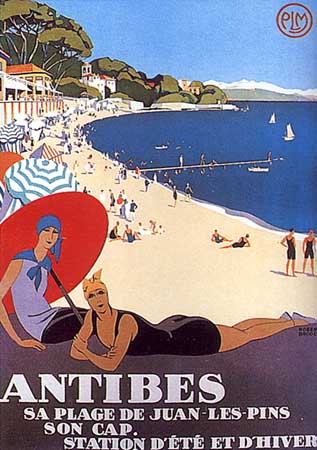
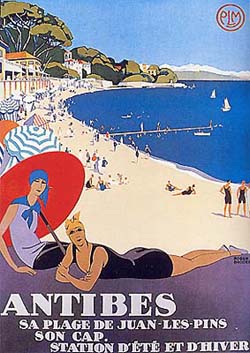
Unfortunately for me, an excursion to the Riviera is just out of my reach, so I'll have to settle for Jim Ring's new(ish) book Riviera: The Rise and Rise of the Côte d'Azur, and my old 1:100000 scale Michelin map of the Côte d'Azur from 1989. Also, in keeping with the theme, I highly recommend J.G. Ballard's 2000 literary techno-thriller Super-Cannes, as well as his review in The Guardian of the aforementioned book by Jim Ring. Finally, if you like these two vintage posters, you'll want to know that both were designed circa 1930 by a certain Roger Broders, the most accomplished affichiste of the golden era of French travel posters. He seemed to mainly do work for locations on the French Riviera and in the French Alps (including this alpine masterpiece from 1927 that I have hanging up on my wall), but he also realised posters for locations around the world. If you're as hardcore as me, you'll also want to pick up the recueil of his travel posters recently published by Queen Art.

Purchase the items mentioned in this post
Musique automatique by Stereo Total: [Canada] [France] [Deutschland] [UK] [USA]
Riviera by Jim Ring: [Canada] [France] [Deutschland] [UK]
Super-Cannes by J.G. Ballard: [Canada] [France] [Deutschland] [UK] [USA]
Roger Broders, Travel Posters: [Canada] [France] [USA]

La citation du jour 2006-07-16

Le grand public pense que les livres, comme les oeufs, gagnent à être consommés frais. C'est pour cette raison qu'il choisit toujours la nouveauté. -Goethe (via Heileen)
Goethe is saying that the general public thinks that books, like eggs, should be consumed fresh. For this reason, the average punter tends to choose new releases. Of course the average punter these days isn't likely to choose a book at all, but this idea can be applied to the consumption of culture in general (television, cinema, etc.).

This is as true today as it was in the time of Goethe, particularly in the Anglo-saxon publishing world, where new releases in hardback can be found piled high in supermarket bargain bins just months after publication, thereby making room in the 'proper' bookshops for the next slate of throwaway bestsellers.

In the world of French publishing, hardbacks barely even exist anymore. Most new releases are done in a high-quality trade paperback format, and very often they remain in print for decades after their initial publication. After a year or so many books will also be available in the poche format, which is of a slighly better quality than the Anglo-saxon mass market paperback format. I wouldn't be surprised if the hardback format remains in use in the Anglo-saxon publishing world specifically because it stands up better to the demands of the supermarket bargain bin environment, i.e. an environment where books are chucked about by philistines like so many pieces of worthless tat.

What can you say? You just get the feeling that the written word is treated with more reverence in certain cultures than in others. Different strokes for different folks...

14 July 2006

La citation du jour 2006-07-14

Interroggée sur l'antenne de France 2 dans le cadre du 14 juillet, Michèle Alliot-Marie, la ministre française de la défense, a dit:

L'armée a réagi avec beaucoup de réactivité
Can you say langue de bois?

13 July 2006

La citation du jour 2006-07-13

The newest feature of this blog is the tried and tested Quote of the Day. This, the inaugural entry, comes courtesy of Lucas Armati writing in Télérama's Blog Télévision:

Marre de ces [....] documentaires dont le seul suspense consiste à savoir s'il s'agit d'une coproduction franco-allemande ou germano-française ?
Lamenting the state of summertime telly in France, he asks: 'Aren't you sick of these documentaries whose only suspense consists of finding out if it's a Franco-German or Germano-French co-production?'

Outstanding!

Les ponts de Paris

There's a wonderful article by John Lichfield in today's Independent about the new Passerelle Simone de Beauvoir, and more generally about the history of bridges in Paris.

Choice extracts:

The bridge is both chaotically modern, and graceful, preserving a long tradition of epoch-defining but beautiful Parisian bridges going back for 400 years.

[....]

Paris has more river bridges than any other city.Other river-bisected cities, such as London, Rome and Budapest, have a dominant bank. The Right Bank and Left Bank of Paris, although different in character and preoccupations, are equal partners.

The President lives on the Right Bank; the Prime Minister's official residence is on the Left Bank. The principal business quarter is on the right, but the parliament and most academic institutions are on the left. Ministries and museums are scattered on both sides. Some urban historians say that the proliferation of bridges explains why Paris has developed so evenly on both sides of the river. Others suggest that the fact that both Rive Gauche and Rive Droite were equally important forced the Parisians to build a lot of bridges.

[....]

The oldest surviving Paris bridge is, theoretically, Le Pont Neuf (the new bridge), completed in 1607. Its 12 low, sweeping arches and its breadth made it one of the wonders of Europe in the 17th century.

[....]

The Simone Beauvoir bridge continues this all-purpose tradition. If you walk along the oak planks all the way from the high sides of the Parc de Bercy to the top of the steep steps in front of the library, you cover 300 metres. You can, however, divert on to the lower deck or arrive or leave by the slopes, stairs and lifts to the lower Seine quays.

The high deck gives you a splendid view of eastern Paris, with the double-deck Bercy bridge carrying both Metro trains and cars in the foreground. There are glimpses from the northern end of the Eiffel Tower and Notre Dame. The lower deck takes you close to the water, just above the tourist launches and the barges full of coal or gravel.

Fascinating stuff...

12 July 2006

L'été à Lutèce

Piscine Joséphine-BakerIt could be my small-town naïveté, but I have never heard of anything like this. Paris has just inaugurated (slideshow) its 35th municipal public baths. Nothing too extraordinary in that, except that this swimming pool floats on the Seine. It's called the Piscine Joséphine Baker and is moored on the Left Bank, just opposite the Bibliothèque Françcois-Mitterrand. On board this floating marvel, in addition to a 10x25 metre swimming pool, one can also enjoy a pataugeoire, saunas, a jacuzzi, Turkish baths, a restaurant and snack bar and a fitness centre including weight room. There are also two solariums, one on board and one on the adjacent land, where people can relax and get a natural tan. If that weren't enough, it also has an eco-friendly ozone water treatment system that purifies the water from the Seine as it is pumped into and out of the pool. The facility will be operate daily, year round (the roof can be opened or closed in a matter of minutes), and will be open as late as midnight on certain days.

The construction took 18 months and cost 17 million euros. Bertrand Delanoë, the Socialist mayor of Paris, says that the most important thing about this realisation is that it enables all citizens to have access to what is beau and joli. I cannot imagine a publicly-funded project in this part of the world going ahead on that basis. The concept that beauty could somehow improve or enhance our lives and therefore be considered to be a legitimate aim of the state (i.e. if you're already going to build a swimming pool, you might as well put in a bit of
effort and make it interesting and not ugly) is completely and utterly foreign in these parts.

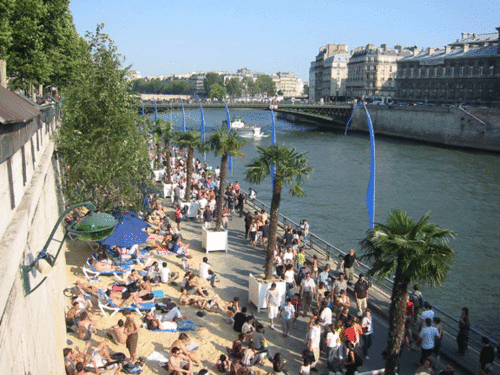
Passerelle Simone de BeauvoirThe Piscine Joséphine Baker is right next to the brand new Passerelle Simone de Beauvoir, an ultra-modern footbridge over the Seine that's due to open tomorrow. It's the 37th parisian bridge currently spanning the Seine and, according to The Independent, Paris continues to boast more river bridges than any other city in the world. Together, the floating pool and footbridge will form the centrepiece of this year's Paris Plages, which since 2002, through the reduction of traffic, the importation of huge quantities of sand and the organisation of numerous activites, has transformed the Right Bank Paris Plage 2004(and as of this year also the Left Bank) of the Seine into a beach-front holiday resort for those not fortunate enough to escape the capital during the summer holiday season. Of course one can access Paris Plages by métro, bus or boat, and there's even a boat service linking the different sites. It all sounds like too much fun. As the self-proclaimed River City of Canada, we should try something similar over here. It will never happen though. The mayor's too busy covering our urban parkland with condos.

As an aside, both Le Montieur and French Duck report that there used to be another floating swimming pool on the Seine called the Piscine Delign
y. The details are a bit sketchy, but it was apparently run as private enterprise and was bulit back in 1805. Depending upon who you believe, it sunk either on 8 July 1993, or sometime in 1995. Meanwhile, Delanoë has promised a second floating municipal pool, to be moored in the 15th arrondissement, just opposite André Citroën Park. It should be ready by 2010 at the latest.

I tell ya, it's a heck of a town. Can you imagine what sort of things they would be coming up with if they had actually been awarded the 2012 Olympics? The mind boggles...

20 June 2006

L'affiche publicitaire française (1)

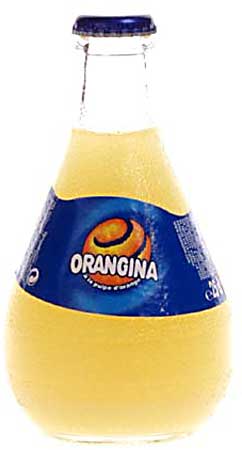
Hooray! I've finally found someone in Winnipeg that sells Orangina in a nice, big 1750mL bottle. Much better than paying $2 for a tiny little bottle on Osborne, Corydon or Provencher. You know Orangina, right? That wonderful little French drink that's not much more than carbonated water and orange juice, the Orangensaft mit Sodawasser that I so enjoyed during my boyhood trip to Europe. But it's not just that it tastes better and is more refreshing than any soft drink you've ever had. There's also the legendary iconography created by Bernard Villemot, of which the poster featured here is the best known example. I must confess that the whole Orangina experience somehow transports me to the Côte d'Azur, perhaps during the earlier part of the twentieth century, and I can just imagine myself relaxing at Antibes or Juan-les-Pins, enjoying the sun and sipping a surprisingly refreshing citrus-based carbonated beverage. Ridiculous, certes, but much more enjoyable than living in the real world. If any of this resonates with you, then you will certainly want to visit the Virtual Orangina Museum, and to see more of the work of Bernard Villemot. If you're really hardcore like me, then you will also want to pick up the beautiful book (see below for purchasing information) that came out last year featuring Villemot's best posters (Hoëbeke, 2005).

European poster art, especially the art of the French advertising poster of decades gone by, has always fascinated me. In the future there will be more posts related to this most agreeable of topics.

To buy the book, choose the option nearest you: [Canada] [France]

01 June 2006

Avec Jean-Marie, je n'ai plus de peine

Those of us who are baffled and dismayed by the continued popularity of the far-right in France (can 31% of the population really be wrong?), less than one year away from the presidential election, can at least take comfort in the extremely good taste employed by the extrême droite when choosing campaign music. Have a listen to this ditty from 1997, composed in the zouk style of Caribbean music brought over by the brown people they so detest.


Avec Jean-Marie, je n’ai plus de peine... Great lyrics! Peine... Jean-Marie Le Pen. Get it? Who says the Front National doesn't know how to have a good time?

In trying to understand the two sides of this coin of French malaise, viz. the riots in the suburbs on one hand and the popularity of the far-right on the other, I found this succinct little mise en scène produced by Arte Radio to be most instructive. Imagine the French political class to be the incredibly out-of-touch, inept, inefficient and unresponsive customer service department of a large company. Then imagine yourself as a French citizen trying to connect with it via the main switchboard...

powered by ODEO

25 May 2006

My New Favourite Blog

I love French culture. I love French music. I especially love French sixties music. Vidéo Nostalgie serves up classic music videos from this era that I am too young to have seen at the time and too far away from France to be able to see today on Télé Mélody.

Take this clip, Poupée de cire, poupée de son, for example:


Written by Serge Gainsbourg, one of the greatest pop geniuses ever, and perfromed by France Gall, it won the 1965 Eurovision Song Competition. Isn't it wonderful? It must surely be one of the best pure pop songs of all time and has always been a favourite of mine. Vidéo Nostalgie is simply
chock-full of gems like this. Highly recommended!

Un grand moment de télévision


Vidéo envoyée par brunette45

Il s'agit d'un des moments de télé les plus rigolos que j'ai jamais vu. Je crois que ça date de Cannes 2003, lorsque le plateau de On a tout essayé s'est déplacé pour une semaine sur la Croisette. Nous, les malheureux qui habitent les lointaines provinces anglophones de l'ouest du Canada, avons pu suivre tout cela grâce à TV5. J'en ai toujours gardé le souvenir et je suis ravi d'avoir retrouvé le clip. Il s'agit de Hugues Delatte (journaliste inepte et l'alter-ego de Raphaël Mezrahi) qui rencontre Britney Spears pour mener son «premier interview professionnel». À découvrir ou à revoir !

Stéphane Pocrain candidat aux présidentielles 2007

C'est officiel ! Stéphane Pocrain, chroniqeur télé chez Laurent Ruquier et ancien porte-parole des Verts, sera candidat à l'Elysée en 2007. C'est lui-même qui vient de le déclarer sur le Bondy Blog. En tant que jeune, écolo, fan de l'émission de Ruquier et admirateur de la France, avec en plus des origines antillaises, je ne peux qu'être pour sa candidature.

Il déclare dans Le Monde :

l'élection présidentielle ne doit être interdite à personne" : "Il n'y a pas de couleur de peau pour être candidat à la présidence de la République. Il n'y a pas d'âge. Il n'y a pas de parcours obligé. On n'est pas obligé d'avoir fait l'ENA ou Polytechnique. Tout le monde a le droit d'être un militant politique, donc je suis candidat


Je crois que c'est un argument qui a de plus en plus de validité, surtout vu ce que font les énarques avec le pouvoir en ce moment.

07 February 2006

Media Concentration in Publishing Marches On

Hachette, already the largest publisher in France and New Zealand, and the second largest in the United Kingdom, Australia and Spain, is now the third-largest publisher in the world with today's aquistion of Anglo-American publisher Time Warner Books. The two largest book publishing groups in the world remain the UK's Pearson (Penguin, etc.) and Germany's Bertelsmann (Random House, etc.). Man, if people read books, Europe would control the world!

Speaking of ruling the world, let's talk about about media concentration. After the Vivendi Universal débâcle, Hachette owned such a large share of the publishing market in France that the European Union had to step in and force it to sell off some of its publishing empire. It remained nonetheless the largest French publisher by a comforable margin. American publisher André Schiffrin, the longtime head of Pantheon Books (before they were aquired by Random House and he was eventually forced out), addresses the problems of media concentration and the aquisition of publishers by large conglomerates in his three books L'édition sans éditeurs, The Business of Books and Le contrôle de la parole (all are highly recommened!). He explains the enjeux much better than I can, but I'll briefly convey my issues with the way things are headed.

The first problem is that big business that don't understand publishing expect every book to make a profit. They simply see their shiny new book business as a touch of class and a new profit centre. They are unaquainted with the traditional model of publishing in which a publisher's most successful titles subsidize those that meet with less initial success. Some books will lose money. This is done because it is thought that while an author's first book might not make money, if his career is nutured they can profit from the talent they know he has (they would publish authors they believe in, not rubbish ones that they think might earn them a quick profit) as his reputation grows. They grow his audience, and then the audience will come back and buy his backlist. There was some sense that a book was not just a commodity like another, that it had some value beyond the money it could bring in. Hence, some books would be published simply because the content was deemed to be important, regardless of the potential for profit, present or future. Gallimard is a prime example of this practice, and today they hold the position of the largest independent publisher in France. It has been said that they have the best backlist in the world (Proust, Camus, Gide, Sartre, Cocteau, Beauvoir, etc). All of this is releated to the French concept of the exception culturelle, that culture should somehow be treated differently and not entirely left to the market.

The second problem is that as publishers are bought up and grouped together, there are fewer people deciding on which books will eventually make it into the shops. They could still be making the great decisions and publishing great books. The fact that the power to make those decisions are concentrated in fewer and fewer hands will be reflected in the resultant output. A narrower range of voices get through and the public debate suffers.

All of this having been said, and keeping in mind that I do realise that when we are dealing with huge publicly-traded companies nationality doesn't matter, part of me (the incorrible europhile I suppose) is somehow reassured by the fact that it's Europe that's building these great publishing empires. Hopefully this is less an end to democracy and more a first step to Mark Leonard's better, brighter future.

What's the 411, yo?

I've been listening to On va s'gêner (heard weekdays on Europe 1) quite a bit these days, especially now that it's available as a podcast. When you listen to this daily ninety minute programme, you always seem to hear two or three amusing adverts for the telephone number 118 218, which is a Directory Assistance service in France; an equivalent of our North American 411 if you will. Hearing that advert reminded me of the 118 fiasco that I had heard them talk about on BBC Radio 4 back in 2003 without really knowing what they were talking about.

What could possibly be interesting about Directory Assistance (or Directory Enquiries as the service is known in the UK) you ask? Well, for a normal person, probably nothing. But since I'm not normal I'm going to tell you all about it.
Here in North America we dial 411 to find a telephone number. In France you would dial 12 for France Télécom's Renseignements Téléphoniques, and in the United Kingdom you would dial 192 for British Telecom Directory Enquiries. Simple. But these services, and others elsewhere in Europe were monopolies of the (former or current) state-owned telecom providers, so along came a big, bad European Directive which apparently imposed the deregulation and liberalisation of the Directory Enquiries system across the European Union, and also required that 118 be used as the standard prefix for all such services. Lotteries were held in different European countries to allocate these 118 numbers (theoretically 1000 numbers per country are possible: 118 000 to 118 999).

This was first implemented in the United Kingdom in late 2003, and apprently caused all sorts of problems, most notably higher costs and worse service for consumers. Even before the changeover and ensuing fiasco, the mourning for the old 192 service had begun. By mid-2004, there were over 120 different UK 118 numbers people could call for directory enquiries, including
118 118, whose adverts I find hilarious, malgré moi. This chappie, however, did not find them quite as hilarious, so the adverts were pulled and the concept has been reinvented as a 1970s cop show parody.

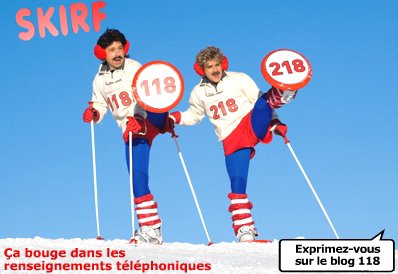
Currently, the deregulation is being implemented in France. 118 numbers are being launched and the old 12 serivice will be discontinued by spring. This is of course where my radio adverts for 118 218 come in. They have this sort of disco music in the background, and this bloke called 118 is talking to this other bloke called 218, and it's so ridiculous that I can't help but find the whole thing hilarious. Now I see they've got a website, equally hilarious telly adverts, a blog, and a real-life national TouTouYou-Tour (the chorus of the disco jingle is not so much a lyric as a sound that would be written out phonectically as 'toutouyoutou').

Both the Bristish and the French adverts seem equally ridiculous
and very similar in nature (vaguely 1970s-looking dodgy chappies with moustaches and silly sports gear doing silly things). At first I thought plagiat!, but it turns out that The Number, which runs 118 118 in the UK, and Le Numéro, which runs 118 218 in France, are the same company. It's interesting that they would use virtually the same adverts in both countries, but it seems to work. Currently, Le Numéro is taking France Télécom to court, accusing them of unfairly withholding information from their directory database and favouring their own directory enquiries service.

I find the whole whole affair, i.e. the reckless deregulation, the lotteries, the fiasco and the ridiculous adverts (not forgetting the offended distance runner) hopelessly amusing.